
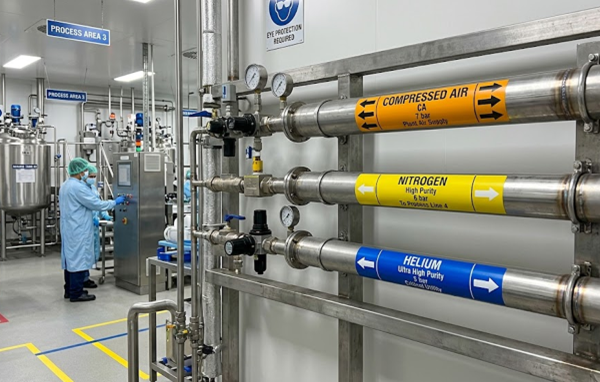
In pharmaceutical manufacturing, clean utilities (including compressed dry air (CDA), high-purity nitrogen gas, vacuum loops, and clean steam distribution networks) are critical to maintaining sterile production conditions. However, these pressurized gas lines are also among the most expensive utilities to generate and maintain.
Industry studies show that up to 30% of a typical plant’s compressed gas volume is lost to silent, microscopic leaks. In a highly regulated, sterile cleanroom, these losses act as a direct, unmeasured tax on your operating efficiency and sustainability.
To address this challenge, modern pharmaceutical facilities are replacing outdated leak detection methods with advanced ultrasonic instruments and acoustic imaging cameras, securing rapid energy savings and a short return on investment (ROI).
The High Cost of Pressurized Gas Leaks
Because pharmaceutical cleanrooms operate under positive pressure to maintain environmental classifications, ambient background noise from air change rates (HVAC) is often intense. In these environments, pressurized gas leaks are completely silent to the human ear and impossible to find visually.
As leaks develop, the plant’s utility compressors must run longer and harder to maintain consistent system pressure. This increased demand results in several negative consequences:
- Accelerated equipment wear
Overworking compressors, dryers, and air filters shortens their operating lifespan and increases the frequency of preventive repairs. - Reduced quality control
Pressure drops in sterile nitrogen blanketing lines or vacuum packaging systems can lead to unstable processes, compromised product quality, and high scrap rates.
Escalated energy costs
Compressors are highly inefficient; only a fraction of their consumed electrical energy is converted into usable work, meaning every leaked liter of gas represents a direct loss of paid electricity.
The Ultrasound Solution: LEAKChecker & CRYSOUND Acoustic Cameras
Ultrasonic leak detectors bypass background plant noise by focusing strictly on high-frequency sound waves (typically between 20 kHz and 100 kHz) produced by turbulent flow at leak points.
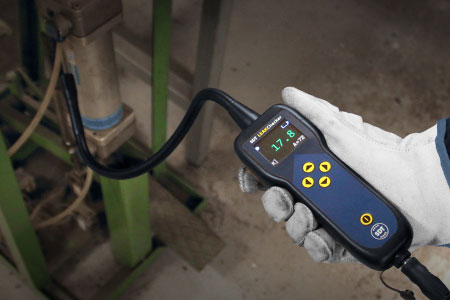
Using compact, intuitive tools like the LEAKChecker, technicians can quickly inspect hundreds of meters of overhead piping.
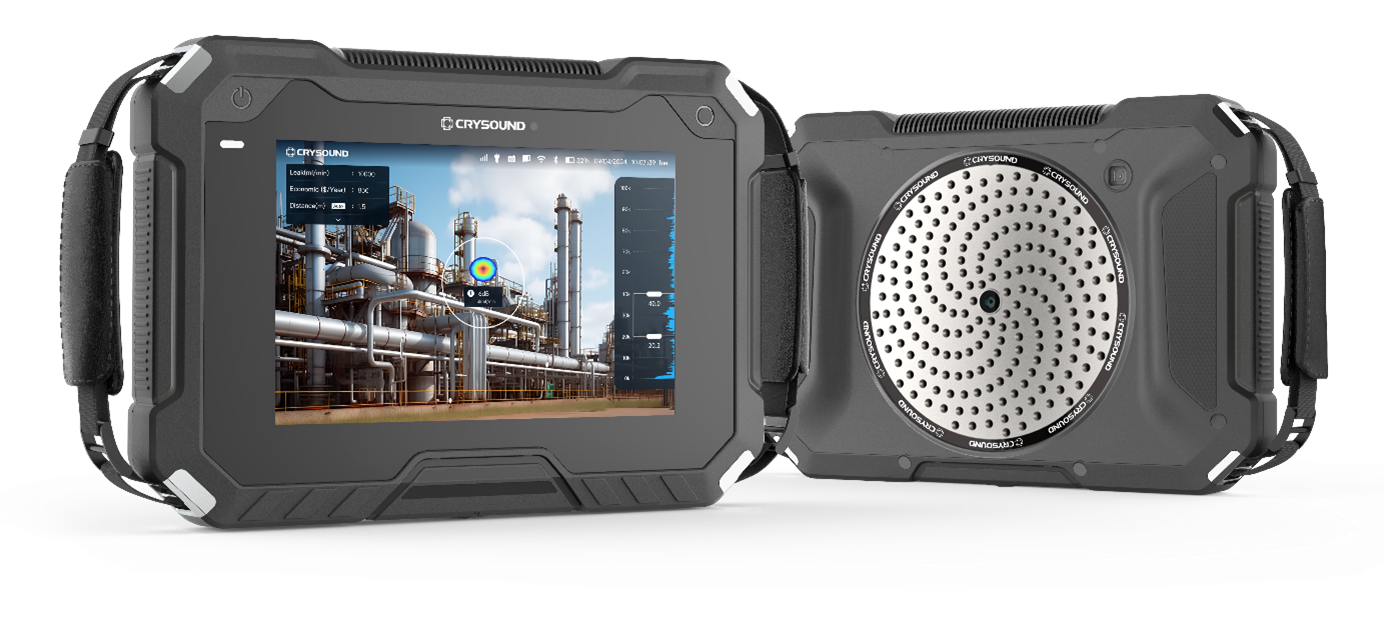
For large-scale facilities, the CRYSOUND acoustic imaging camera takes inspection efficiency even further. Featuring 200 highly sensitive MEMS sonic sensors and a precision optical camera, CRYSOUND visualizes turbulent ultrasound waves as a color-coded “bloom” directly on its interactive touchscreen.
This visual feedback allows maintenance teams to pinpoint gas and vacuum leaks from up to 200 meters away, completely eliminating the need to halt production or set up ladders and scaffolding.
Quantifying the ROI of Leak Management
The return on investment for ultrasonic leak detection is exceptionally fast. In a typical sterile formulation plant, a single comprehensive leak survey using the CRYSOUND camera and the reporting app can identify thousands of euros in annual energy losses.
By inputting local atmospheric pressure and the measured distance of the leak, the system’s cost estimator automatically calculates the volumetric leakage rate and translates it directly into financial impact.
Fixing these leaks reduces utility compressor load, defers capital expenditure for new compressor units, and lowers overall carbon emissions. By turning high-frequency sound into actionable data, ultrasound delivers some of the quickest, most measurable business results in modern predictive maintenance.