
As we reach the midpoint of the decade, the “Planet” pillar of corporate strategy has migrated from the PR department to the center of the boardroom.
For Food & Beverage giants, the race to Net-Zero is no longer a voluntary journey. Driven by the European Corporate Sustainability Reporting Directive (CSRD) and a global shift toward carbon taxation, the carbon footprint of a liter of soda or a kilogram of flour is now a key performance indicator (KPI) as critical as yield or throughput.
However, a significant gap exists between high-level sustainability goals and floor-level reality. While many organizations focus on high-visibility projects like electric delivery fleets or massive solar arrays, they often ignore the most immediate and cost-effective lever for decarbonization: Thermodynamic Efficiency.
The Steam Paradox
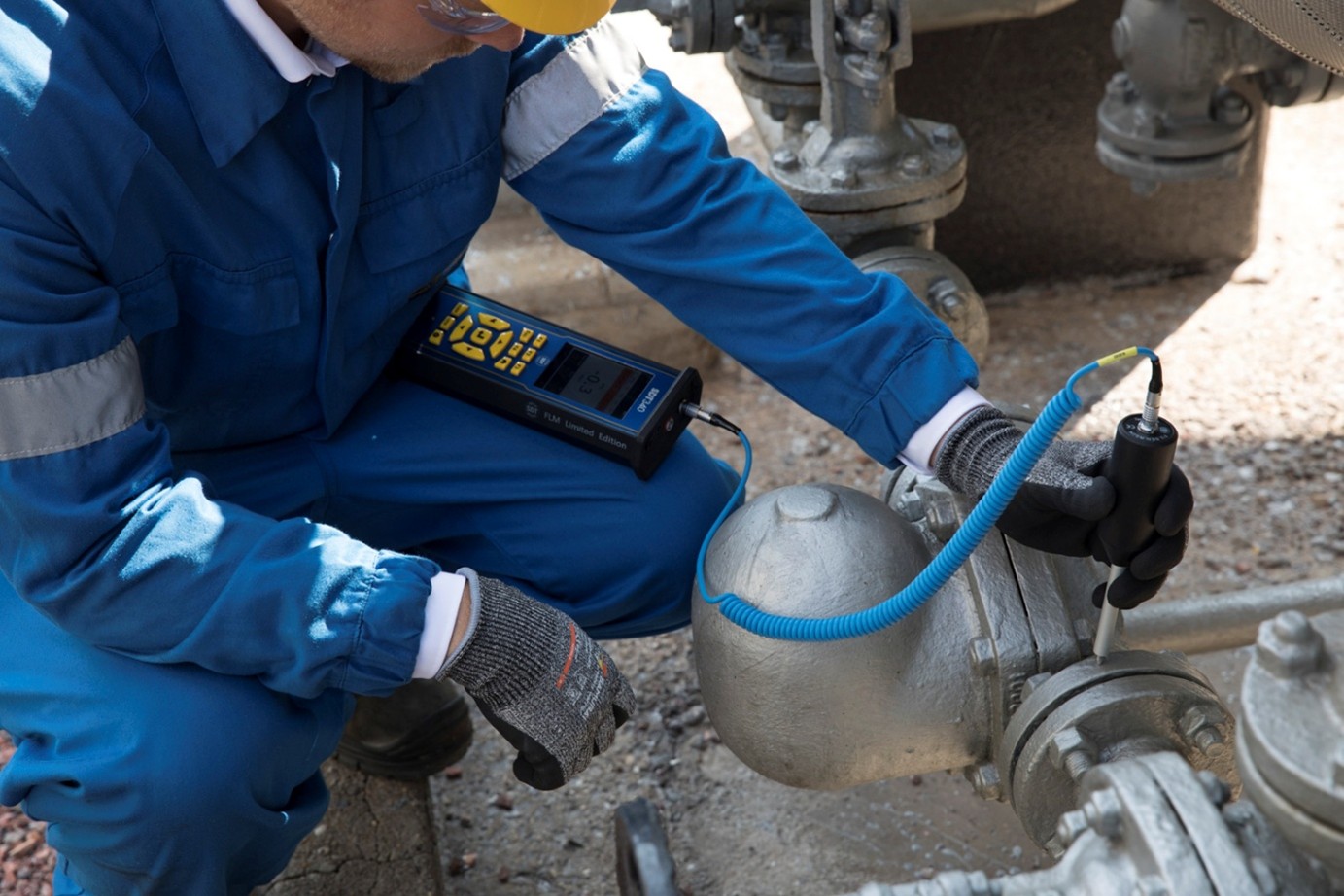
Steam is the lifeblood of F&B processing. It cooks, pasteurizes, sterilizes, and cleans. Yet, steam systems are notoriously inefficient. A single failed-open steam trap, a device designed to discharge condensate while holding back live steam, can waste upwards of 22,5 kg of steam per hour. Over a year, this equates to hundreds of tons of unnecessary CO2 emissions.
The challenge is that steam traps are difficult to inspect visually or with basic thermography. A trap can look perfectly hot on the outside while failing to cycle on the inside. Ultrasound provides the only non-invasive window into this process. By “listening” to the high-frequency turbulence of the steam flow, a technician can distinguish between the snap of a healthy valve and the continuous roar of a failed-open trap.
This is the “Why” of the Planet pillar: we cannot achieve Net-Zero if our thermal energy is vanishing into the atmosphere through faulty hardware. In the Industrial RESET, we view every steam trap as a potential carbon-reduction opportunity.
Compressed Air: The Hidden Carbon Tax
In a typical F&B facility, compressed air accounts for up to 40% of the total electricity bill. Given that most electricity grids still rely on a mix of fossil fuels, every air leak is, by definition, a carbon emission. Statistics suggest that the average food plant “leaks” nearly 30% of its air before it reaches the production line.
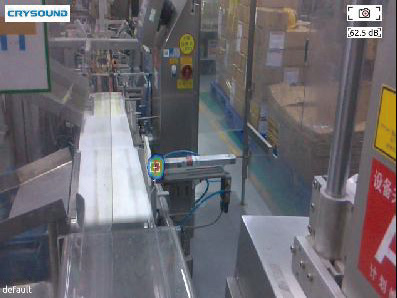
This is where acoustic imaging, such as the CRYSOUND camera, changes the cultural landscape of the plant. Traditionally, leak detection was a tedious, manual process. Today, we can visualize energy waste. When a team can see a “sonic cloud” of wasted energy on a high-definition screen, the abstraction of “decarbonization” becomes a tangible, fixable reality. It shifts the responsibility from a specialized energy manager to the entire workforce.
Redefining the “Industrial Ecosystem”
Sustainability in 2026 is about engineering an industrial ecosystem where waste is physically impossible. The “Why” of ultrasound in this context is its ability to provide real-time feedback on the health of this ecosystem.
By eliminating the turbulence of energy waste and the friction of mechanical inefficiency, we ensure that the F&B industry can continue to feed a growing global population without exhausting the planet’s resources. The greenest kilowatt is the one we never generate, and ultrasound is the only technology that allows us to find and eliminate that unnecessary generation at the source.