
The modern pharmaceutical sector is defined by its pursuit of precision, safety, and operational continuity.
Meeting these demands requires robust diagnostic modalities that operate non-invasively, reliably, and in strict alignment with global regulatory frameworks like the FDA, EMA, and EU GMP Annex 1.
Under these regulations, manufacturers must establish a validated contamination control strategy (CCS) that guarantees cleanrooms and process systems operate consistently within validated parameters.
To meet these strict quality standards, reliability teams are transitioning away from reactive maintenance and toward early-stage ultrasound condition monitoring. By catching mechanical, fluid, and electrical anomalies at their earliest stages, ultrasound provides the ultimate line of defense for pharmaceutical quality assurance.
The physics of early-stage defect detection
In any operational asset, physical degradation follows a predictable timeline known as the P-F (Potential-to-Functional Failure) curve. The very first physical indicator of a developing fault is a change in high-frequency acoustic emissions (typically between 20 kHz and 100 kHz), caused by micro-friction, impacting, or fluid turbulence.
While traditional condition monitoring techniques like low-frequency vibration analysis and infrared thermography are excellent diagnostic tools, they only detect faults after physical damage has progressed enough to shake the machine or generate heat.

Ultrasonic contact sensors capture these micro-events at their inception on the P-F curve. This early warning gives reliability teams a significant planning window—often months in advance of a functional failure, allowing for the transition from emergency, reactive “firefighting” to planned, scheduled maintenance.
Multi-function diagnostics with the SDT340
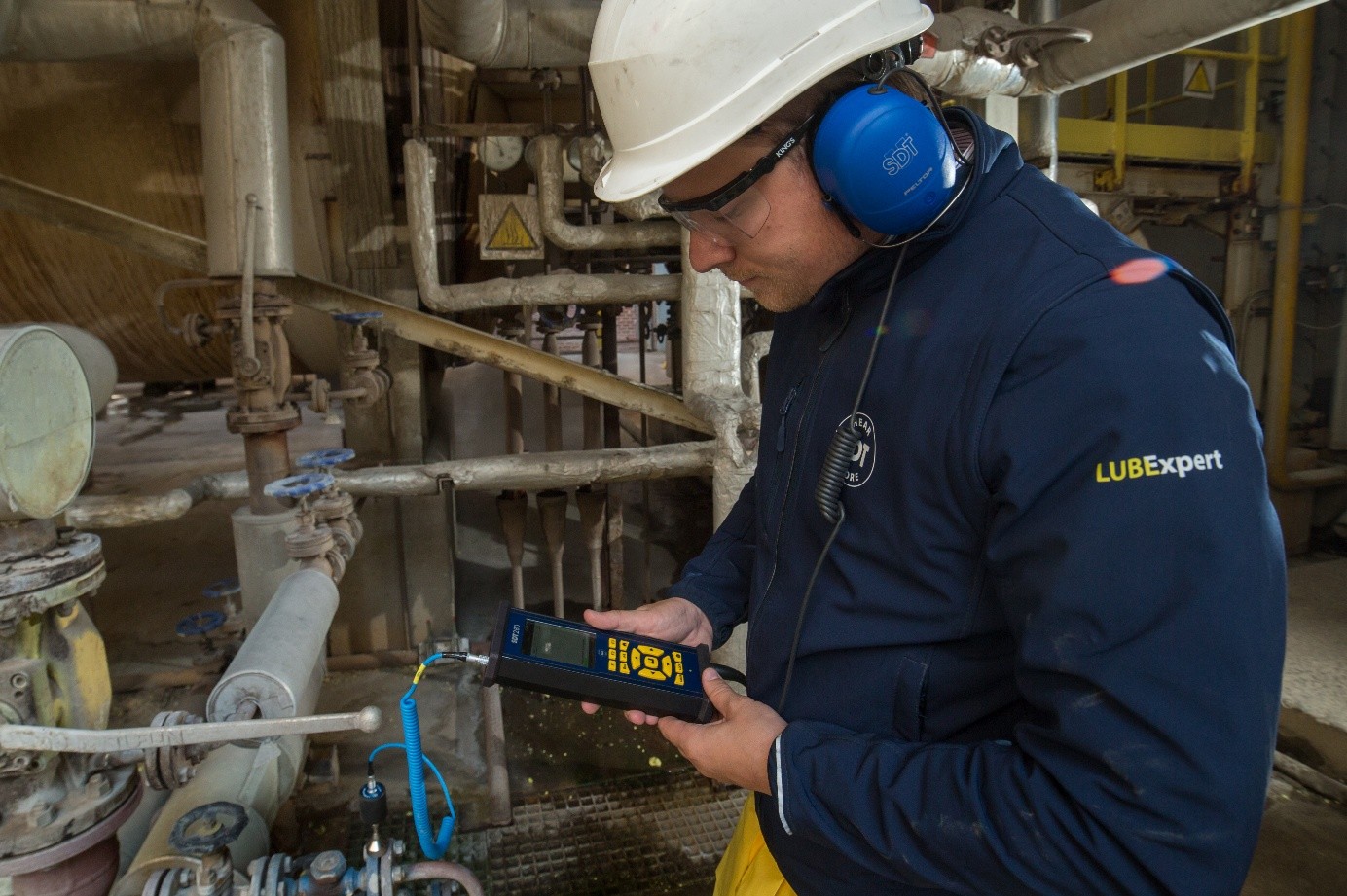
To implement a robust, audit-ready condition monitoring program, pharmaceutical facilities rely on advanced instruments like the SDT340. The SDT340 is a high-fidelity, multi-functional data collector that combines contact and airborne ultrasound with vibration, temperature, and tachometer measurements.
By utilizing a high sampling rate of up to 256 kHz (focUS Mode), the SDT340 isolates early fault signatures from loud background plant noise.
Integrating the SDT340 with UAS3 software creates a seamless, compliant data management workflow. All measurements are automatically recorded, trended, and compared to historical baselines.
Color-coded thresholds and absolute alarms quickly identify developing faults, allowing maintenance managers to prioritize corrective actions based on quantitative risk rather than subjective guesswork.
Supporting GMP compliance and quality control
Integrating early-stage ultrasound diagnostics directly supports pharmaceutical regulatory compliance:
- Validated operations
Continuous, repeatable acoustic measurements ensure that rotating assets (like bioreactor agitators, tablet presses, and filling machines) always run within their validated operating envelopes. - Cleanroom security
Airborne tightness testing using the TIGHTChecker verifies the physical sealing integrity of cleanroom doors, pass-through hatches, and autoclave gaskets, preventing cross-contamination between containment zones. - Contamination control
Early cavitation detection in Water for Injection (WFI) pumps prevents impeller erosion, ensuring that microscopic metallic particulates are never introduced into sterile water loops.
Implementing ultrasound condition monitoring allows pharmaceutical companies to move beyond simple troubleshooting and build a proactive reliability program that secures product quality, ensures regulatory compliance, and protects overall operational safety.