In the Food & Beverage industry, every machine is a battleground against the second law of thermodynamics. From the high-speed centrifugal separators in a dairy to the massive, slow-rotating grain dryers in a processing plant, friction is the primary antagonist. It is a silent tax that manifests as wasted energy, premature asset death, and, most critically, unplanned disruptions to the global food supply chain.
As we move through 2026, the Industrial RESET demands that we treat friction not as an inevitability, but as a manageable variable. The “Why” of ultrasound in mechanical reliability is rooted in the granular physics of the bearing.
The Over-Lubrication Epidemic in F&B
One of the most counter-intuitive facts in industrial maintenance is that more bearings are killed by “kindness” (over-lubrication) than by neglect. In the F&B sector, where washdowns are frequent and sanitation is paramount, there is a traditional tendency to “purge” bearings with grease to keep moisture out. This “grease-until-it-purges” method is a disaster for all three pillars of our narrative.
- Profit: Over-lubrication causes “churning.” The excess grease creates internal resistance, forcing the motor to draw significantly more electricity to maintain speed. It also leads to seal failure, requiring more frequent (and expensive) replacements.
- Planet: Every gram of excess grease is a chemical waste product that must be disposed of or, worse, ends up in the plant’s wastewater system.
- People: It relies on guesswork, leaving technicians uncertain and machines unreliable.
The Slow-Speed Challenge
F&B plants are uniquely dependent on slow-rotating assets (under 120 rpm). For decades, these assets were the “black holes” of maintenance. Traditional vibration sensors are often ineffective at these speeds because the energy levels of a defect are too low to trigger an accelerometer.
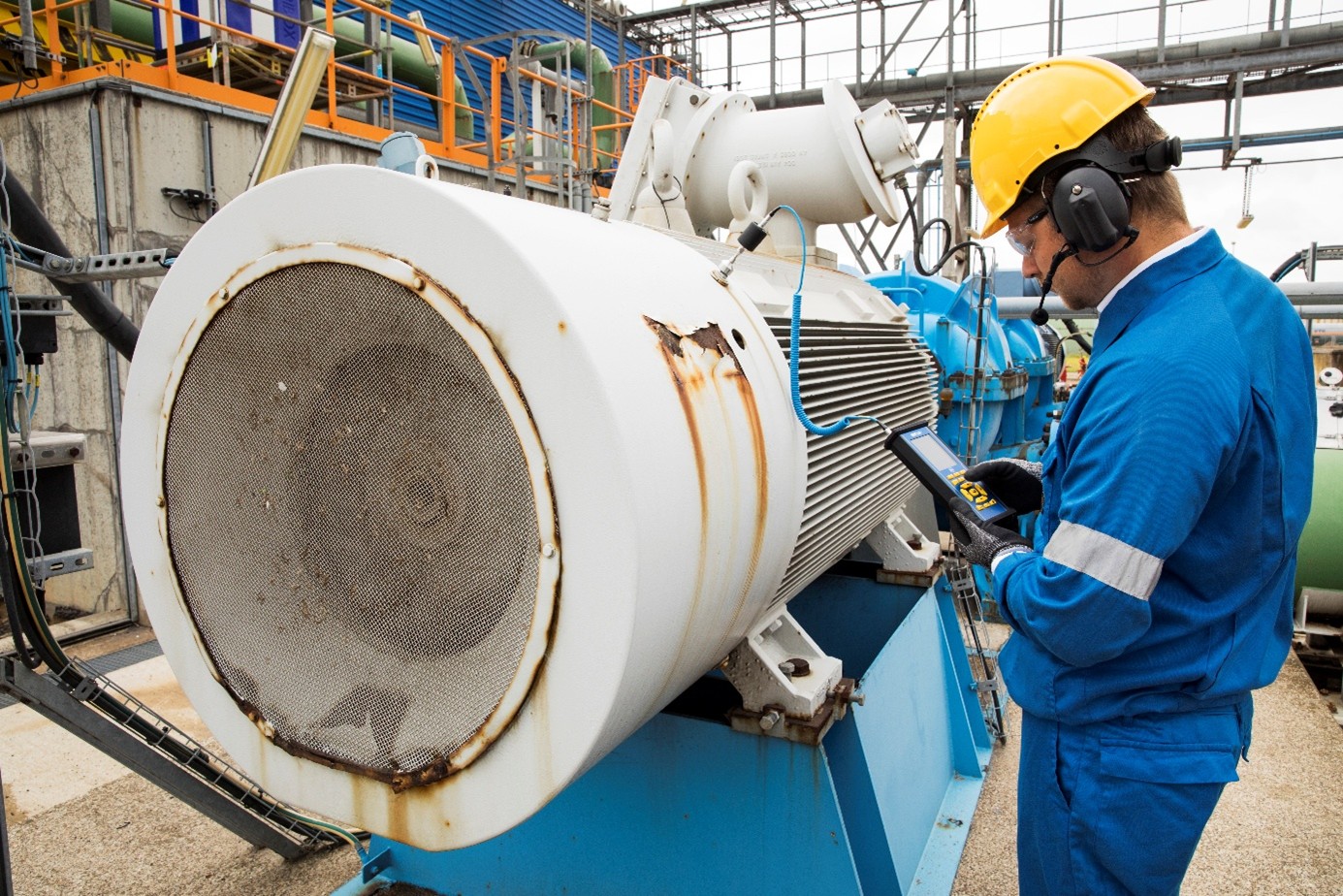
Ultrasound solves this through “Agnostic Physics.” Regardless of RPM, a defect in a bearing raceway creates a microscopic impact. These impacts generate high-frequency “stress waves” that travel through the metal of the machine. Ultrasound sensors, placed strategically on the bearing housing, capture these waves at their source. By detecting these “clicks” and “pops” of friction early, we prevent the heat and metallic debris that can lead to foreign-object contamination—the ultimate nightmare for any food producer.
Reliability as a Food Safety Pillar
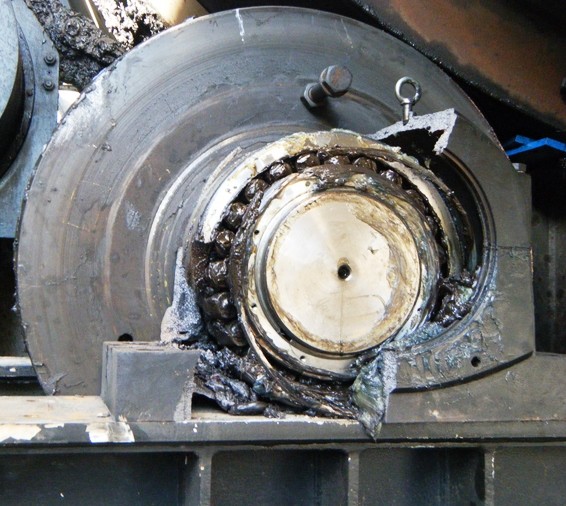
Ultimately, the “Why” of mechanical precision is Food Safety. A machine that is vibrating or overheating is a machine that is shedding particulate matter. A bearing that fails catastrophically can introduce metallic fragments or overheated lubricant into the production stream.
By using ultrasound as the “First Line of Defense,” F&B plants ensure that their assets operate smoothly. Precision lubrication and early defect detection are therefore about ensuring that the food reaching the consumer’s table is safe, affordable, and produced with the highest possible efficiency.